
Grand Canyon Rafting TRIPS
Mastering Whitewater Classifications
The river has a way of communicating its secrets. It carries a constant, graceful song. As you navigate the water, we hope you discover one of nature and the world’s river masterpieces. River runners must connect with the current, anticipate the bends and changes, and know how to react.
Whitewater rapids are formed by three forces of nature: gradient, constriction, and obstruction. The gradient is the steepness of the rivers. It is measured by the loss of elevation over the distance traveled. Low gradients are slow and gentle, while high gradients have large rapids.
Constriction is the river’s flow being forced into a narrower channel between unyielding rocks. The pressure causes water to flow faster and react to obstacles differently, like putting a thumb over the spout of a garden hose.
Obstruction is anything in the path, like a ledge, log, or boulder, that changes or blocks the flow of the water. The place where the obstacle and water meet produces features like a ‘pillow ‘ or ‘overpour.’ A pillow is water flowing backward upstream.
When water flows over an obstacle, the pour-over often results in ‘holes’ or ‘hydraulics.’ Water flows back on itself, much like a whirlpool on its side. They are foamy, aerated water that feels like a hole in the river’s surface.
Wood is the most dangerous obstruction. It creates a ‘strainer,’ allowing water to flow through and trapping solid objects—eventually, an ‘eddy’ forms downstream, where the current suddenly reverses or slows.
River Classifications
American Whitewater developed the International Scale of Difficulty. It provides boaters with a universal way to communicate. The rating system is a guideline for evaluating difficulty and potential danger.
The scale uses Class I to Class VI. There is an exception for a stretch of the Colorado River in the Grand Canyon. It operates on a scale of one to ten. The rating system is a guideline vulnerable to subjectivity and change.
Factors like the type of craft, the water level fluctuation, the water temperature, and changing hazards influence the challenge and difficulty. Fluctuating water levels significantly impact the change, which is, of course, challenging.
Rising waters increase difficulty because water moves faster with less reaction time and fewer eddies. Some rapids become more difficult when the water level is low because rocks move and begin to show. The classification of a river or rapid has nothing to do with the level of fun for you and your friends.
The enjoyment of a river comes from appreciation and attitude. There is pressure and desire to move up the ladder of difficulty. Make those moves in low-consequence runs before attempting rapids of higher classification. Being a Class IV boater one day does not necessarily mean being a Class IV the next.
Class I
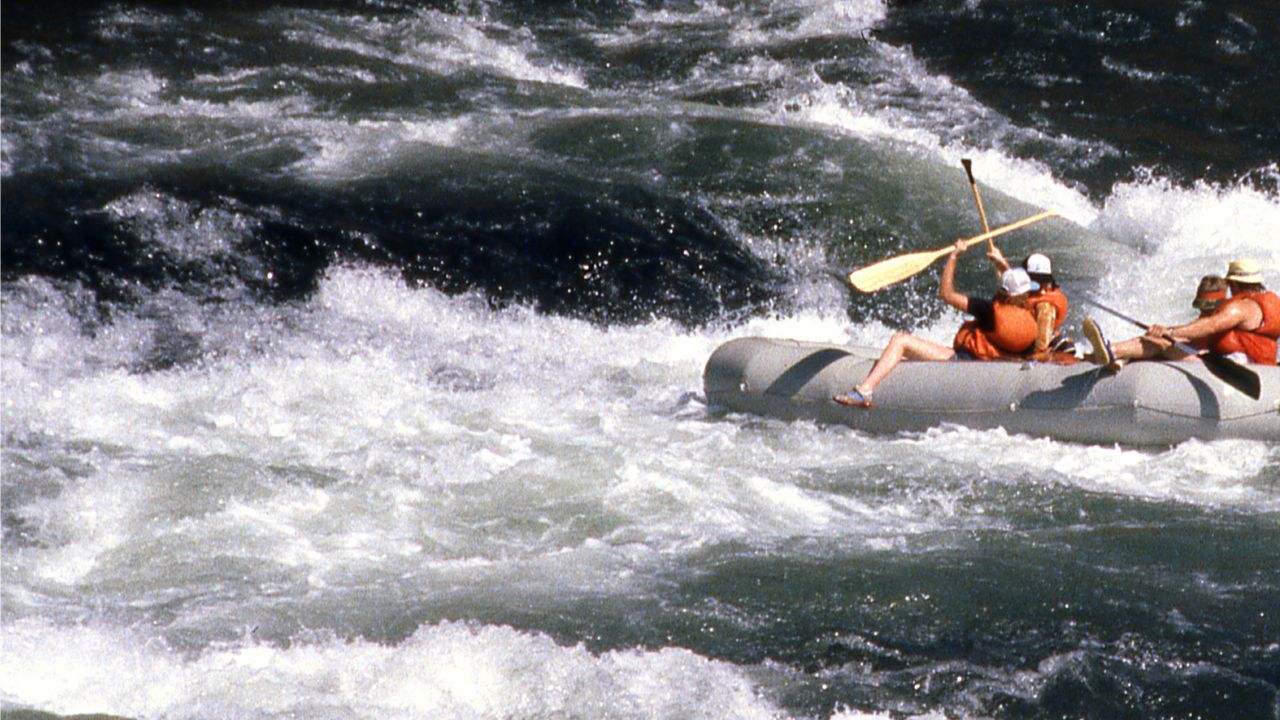
Class I rapids are found in fast-moving water with small waves and riffles. Few obstructions are present, and those are obvious and, with training, can be easily missed. There is only a slight risk to swimmers, and self-rescue is easy. The level of difficulty is suitable for a novice.
Class II
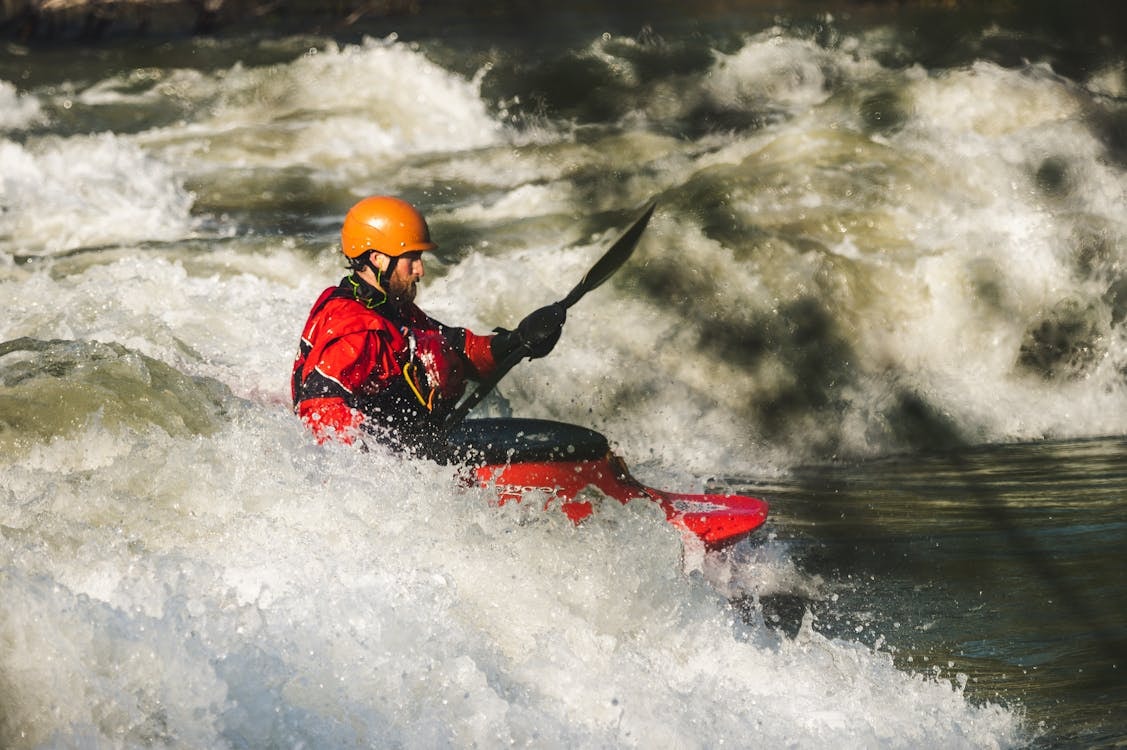
These rapids have clear, wide channels that are observable without scouting. Occasional maneuvers are required. Trained paddlers can easily miss medium-sized waves and rocks, and swimmers seldom suffer injury. A group may offer assistance, but it is optional. This category’s upper end of difficulty is Class II+.
Class III
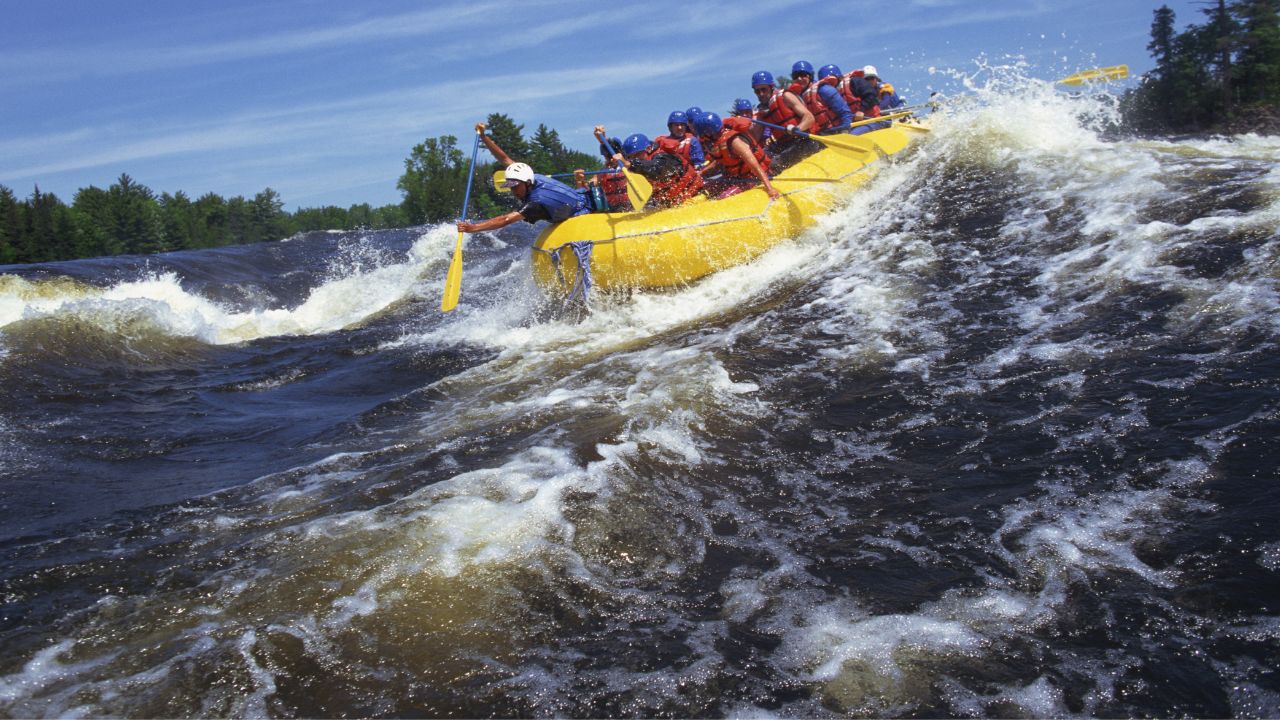
Intermediate skilled rafters will make complex maneuvers in the fast current with moderate, irregular waves, which are hard to avoid. Rafters must be able to control the boat around ledges and tight passages. Strainers or large waves can be easily avoided. Powerful current effects and strong eddies are found, especially on large-volume rivers. Inexperienced parties are advised to seek scouting. Swimming injuries are rare. Self-rescue is typically straightforward, but assistance from the group may be helpful if necessary to avoid long swims. Rapids in this category’s lower and upper spectrum of difficulty are designated III- and III+, respectively.
Class IV
These rapids are powerful and intense but predictable. Advanced-level rafters require precise boat handling in turbulent water. Features include constricted passageways, unavoidable holes, and waves that demand quick maneuvers under pressure. A reliable, fast eddy turn may be needed to rest, scout rapids, or initiate maneuvers. The first time downstream may require scouting. There is a moderate to high risk of injury, and water conditions make self-rescue difficult. Group assistance from those who practice is often essential. An Eskimo roll is recommended. Rapids for this category’s lower and upper ends are designated IV- and IV+.
Class V
This class of rapids is for experts. They are very violent, obstructed, and exceptionally long, which exposes a paddler to added risk. Drops may have unavoidable large waves or congested, steep chutes with demanding complex routes. There may be long distances between pools. They demand a high level of fitness. Small, turbulent, or hard-to-reach eddies may exist. Several factors are combined at the high end of the scale. While scouting is recommended, it may take work. Swimming is dangerous, and rescue is difficult for experts. Practiced skills, extensive experience, proper equipment, and a reliable Eskimo role are essential. Due to the range of difficulty beyond Class IV, Class V has multiple level designations like 5., 5.1, 5.2, and so on. Each level is more complicated. Increasing from Class 5.0 to 5.1 is similar to the increase from Class IV to Class V.
Class VI
These extreme exploratory rapids are seldom attempted. They exemplify the extremes of danger, unpredictability, and difficulty. Mistakes have severe consequences, and rescue is potentially impossible. Only experts at favorable water levels who undergo close personal inspection and take all precautions should attempt Class VI.
Learning to ride whitewater rapids is a long process. You cannot master a few skills to get past the beginner level and break through to Class V rapids. Like surfing, you leave the shore to surf on smaller waves before surfing on large ones. The sequence makes sense. Veteran instructor Jerry McAward, in an article written online, tells us five essential skills are the backbone of a paddling repertoire.
Secret 1 - Remaining Calm
Eventually, everyone ends upside down. The first factor is to get comfortable in that position. Train your brain that you will not drown—practice by taking a normal breath and tipping the raft over. When your head is above water, look around and count to ten.
Doing exercises like this is a vital skill. White water rafting is a skill where there is always room for improvement. Some tips include
Taking advanced courses
Joining a rafting club
Exploring new rivers and rapids
If you enjoy whitewater rafting, consider taking training courses that teach rescue methods, safety skills, and advanced techniques. These classes will enhance your ability and boost your confidence.
Engagement with a rafting forum or community provides insight, advice, and knowledge from experienced rafters. Share your experiences, participate in discussions, and ask questions. You learn from others, stay updated with rafting trends, and exchange tips.
Do not limit yourself to one set of rapids or rivers. Explore rivers with varying levels of difficulty. Each river is unique. New environments help you grow as a rafter.
Secret 2 - Heading for the Exit
A wet exit is nearly a non-issue if you are comfortable being upside down. Tuck your body forward to protect your face. Tap the bottom of the boat to alert your partner. Find the cockpit rim. Slide your hand forward and pull the grab loop to release the sprayskirt if kayaking. Place your hands near your hips and move the craft from your body.
Knowing basic rescue techniques is essential. Understanding them is valuable when trained professionals cannot carry out a rescue operation. The basic techniques include:
Reach and throw
Defensive swimming
Rescuing a swimmer
The first lesson to learn when someone falls overboard is to reach out with a throw bag or extended paddle. If they are within reach, assist them into the raft. If not, throw a floating object or rope for them to grab.
If you are in the water without a raft, the defensive swimming position is to float on your back, with your knees slightly bent and your feet pointed downstream.
If a swimmer needs assistance, use the ‘T’ rescue technique. One group member horizontally extends a paddle toward the swimmer, and the other team members pull them in from the other side of the raft.
Secret 3 -Making Steady Progress
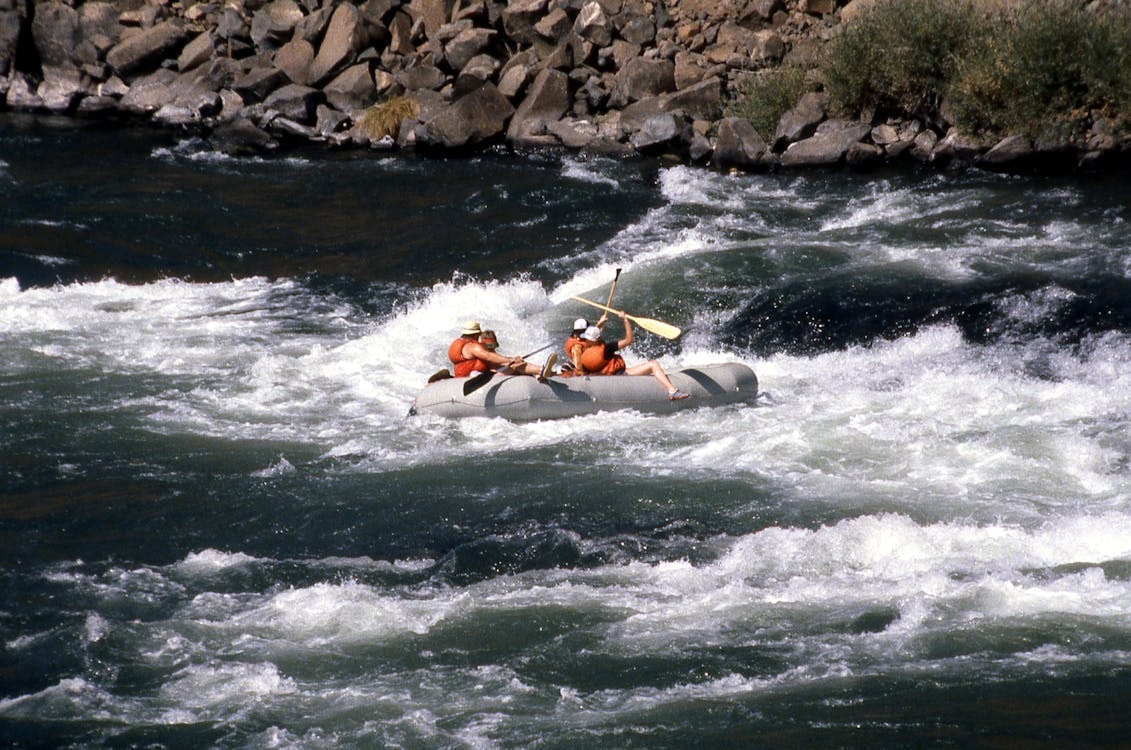
As you sit in the raft, move forward by bringing the paddle near the base as comfortably as possible to minimize the ‘steering effect.’ Hold the paddle loosely and anchor the blade at the toes. Point the raft in the direction you decide you want to go. Unwind the torso without bending the elbows much, and remove the paddle without splashing when it is even with the hip.
The bow will move back and forth as you take forward strokes. Look where you are going to get a ‘visual anchor.’ McAward also explains how to keep the raft steady and play the sweeps. Two more are discussed below.
Secret 4 - Using the Proper Equipment
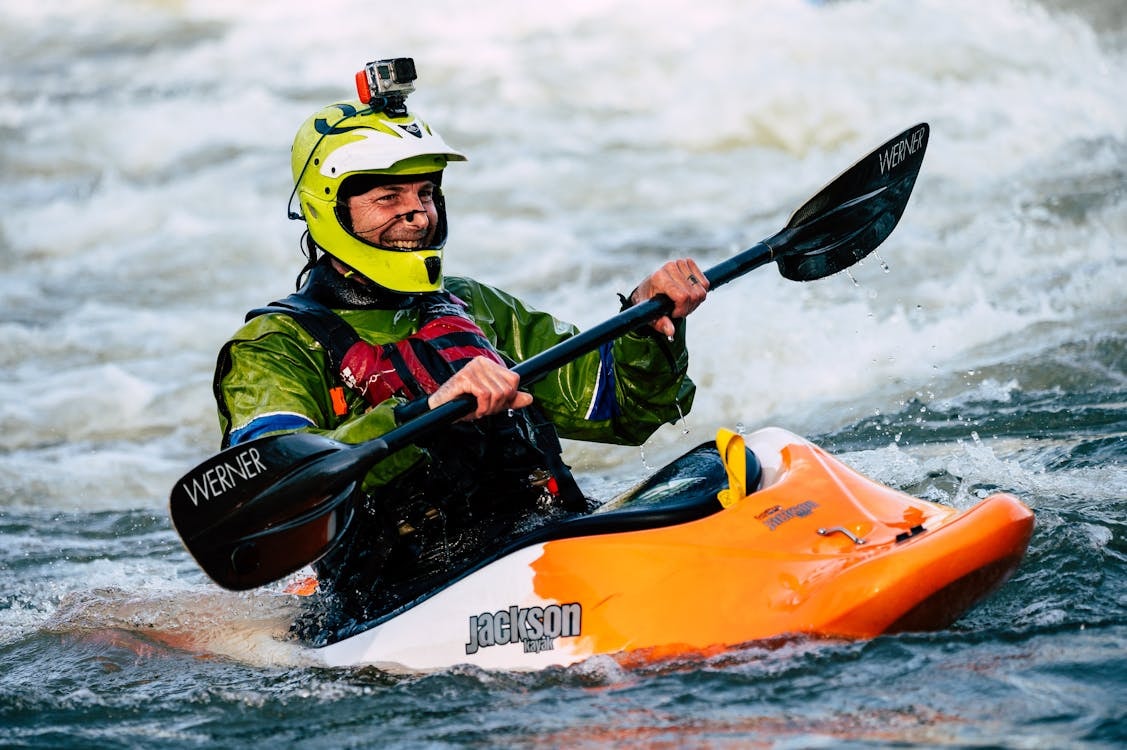
The right gear makes or breaks an experience like white water rafting. The appropriate gear for a white water rafting trip includes personal items, footwear, and clothing. Pack items such as a waterproof camera, a hat, and sunscreen. Fundamental items include:
Kayak or raft
Paddles or oars
Personal floatation device
Helmet
Spray skirt (if kayaking)
Footwear
Optional equipment includes:
Dry or wet suits
Throw bag
Pogies or gloves
Dry bag
Nutrition and hydration
Safety whistle and knife
Proper footwear protects the feet and provides grip on slippery surfaces. Depending on the water temperature, a dry or wet suit is needed.
Secret 5 - Stay Present and Enjoy the Moment
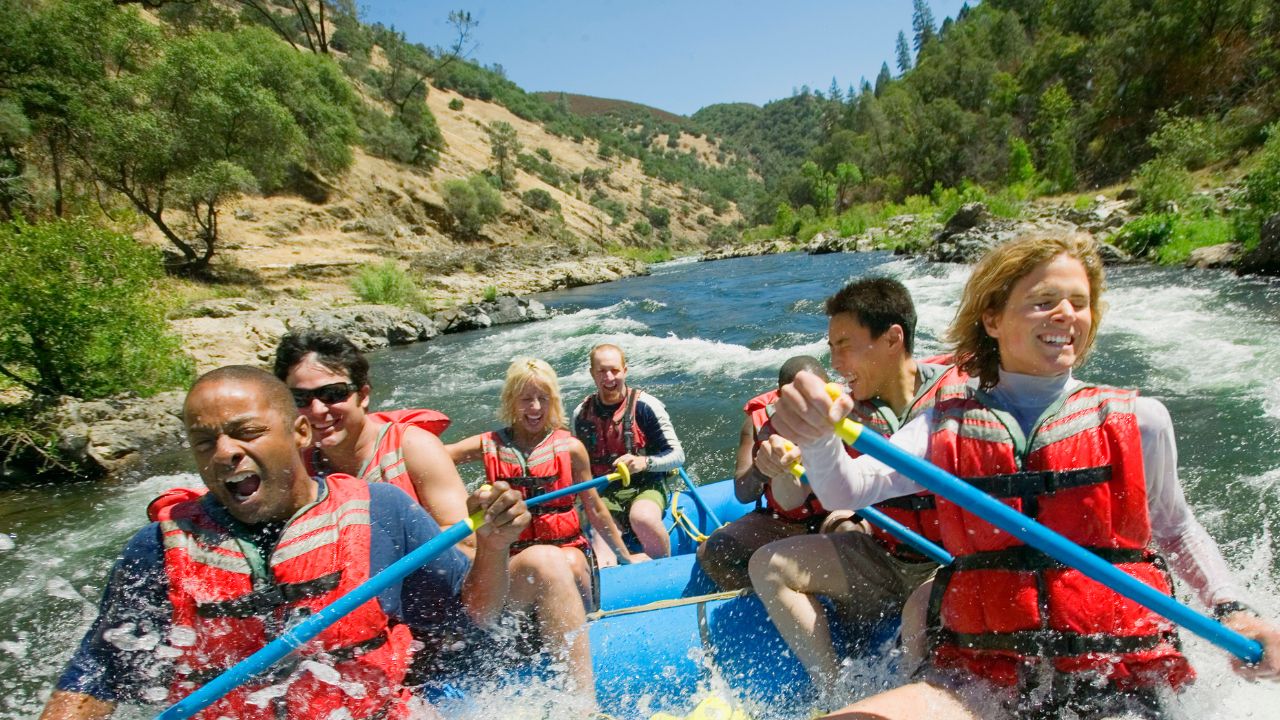
It is essential to immerse in the experience and stay present fully. These tips help beginners make the most of a rafting trip.
Embrace the thrill
Disconnect from distractions
Practice mindfulness
White water rafting is an exciting activity that gets the adrenaline pumping. Rather than let anxiety and fear take over, wondering if you have the talent, embrace the excitement and thrill of tackling rapids. Stay focused on the moment and trust the instructor and fellow rafters.
Disconnect from distractions like work-related thoughts and smartphones. Leave devices behind or safely store them to bond with rafting friends and engage with the surroundings thoroughly. Take in the breathtaking views, listen to and hear the sounds of nature, and feel the water against your skin as you hit a wave.
Benefits of White Water Rafting
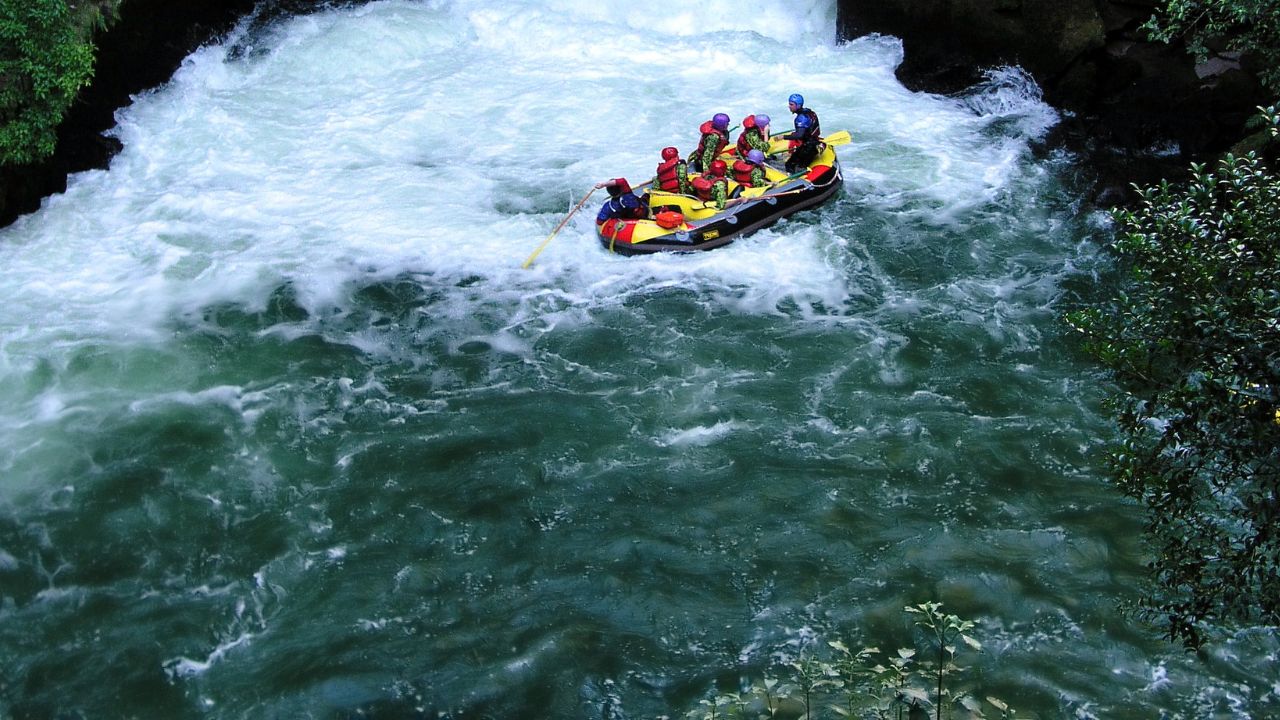
A trip on the river is an excellent way to spend the day. When you navigate the waters, you experience the thrill of conquering challenges and gain various invaluable skills that positively impact a stressful life. The benefits include:
Building resilience and teamwork
Health benefits
Enhancing problem-solving skills
Building confidence
Thinking on your feet
Conclusion
Boosting self-confidence, cultivating adaptability, mastering risk assessments, enhancing problem-solving abilities, and fostering teamwork are lessons that ripple through facets of life. Take the voyage to discover the world of amazing skills. Book a white water rafting trip with Advantage Grand Canyon.
Contact Advantage Grand Canyon today to search for rafting trips from all the top 15 outfitters in one place and book your next Grand Canyon rafting trip!